Your prototype is supposed to look like garbage.
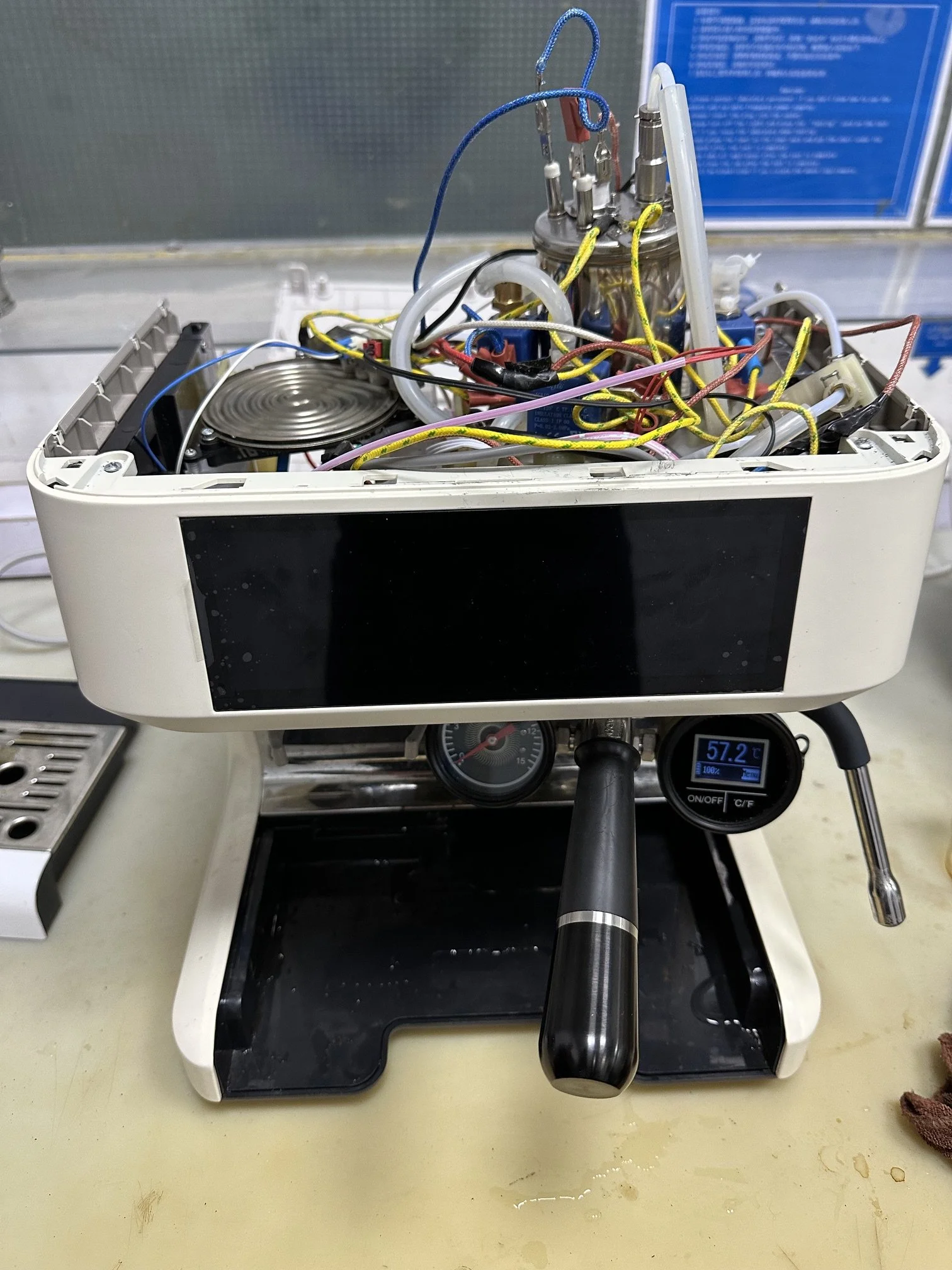
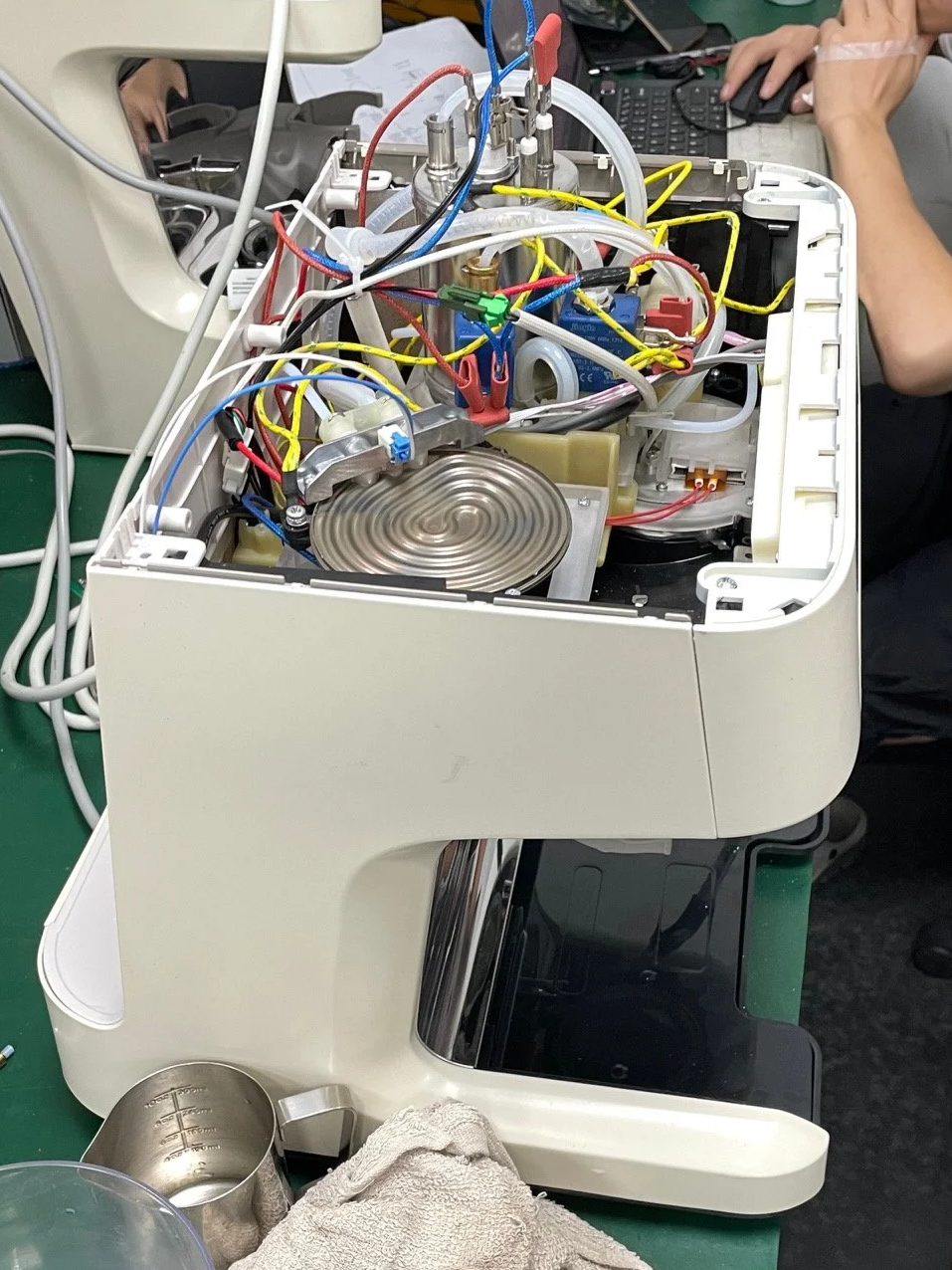
This morning I found pictures of the original prototypes that we made to prove out the thermal architecture of Espresso Series 1. I had a wild idea, made some sketches and quick CAD, did some back of the envelope heat transfer calculations, made an architecture diagram, and sent it off to our contract manufacturer to get help cobbling something together. Within a few weeks, I was on the Saturday 11PM red eye to Hong Kong out of SFO. Land early Monday, taxi to mainland China, arrive at the factory by 9AM to build and test.
Early on in my career, I didn’t think that I was capable of inventing anything. It seemed completely foreign to me. Coming up with something completely new felt impossible. I never knew where to start.
What I learned over time is that you simply have to start. Some people get so paralyzed by not getting it right on the first try that they never try at all. Here are some tips that I hope can help others who are starting out in their career (or those who may have felt stuck, like I did).
Don’t try and solve the entire problem at once.
Every large innovation that I have been able to make in my career started by breaking the problem down to the fundamental building blocks of physics. Don’t try and tackle the entire problem at once. Break it up into manageable chunks and chip away at each segment until you make progress. For example; with Series 1, “design an espresso machine from scratch” can be absolutely overwhelming; but by breaking down each subsystem into mini-problems, it allows you to focus. Espresso, steam, hot water, solenoid layout, pump control, thermal control system, materials, regulatory and compliance; etc. Break them down to their core and start from the bottom.
Start with your idea, even if you think it sucks.
I can remember the days of staring at a blank screen in CAD and just believing that whatever I came up with wouldn’t be that elegant. The simple truth is that’s ok! The first thing that you get onto paper is probably not going to be the final thing that makes it to production. It’s almost guaranteed. What you need to do is try, fail, and learn. Over and over and over again. With every revision comes knowledge, and usually that design goes from something pretty brutal to one that begins to take shape. The only way to learn is through failure. Get comfortable with it. The more you fail, the closer you are to understanding the real problem.
Your prototype is supposed to look like garbage.
If you are shooting for the perfect, polished prototype, you waited too long to learn. As soon as you have an idea, do some back of the envelope first principles calculations to make sure you’re not wasting time, and then get to building. It’s not supposed to be perfect; it’s supposed to be a vehicle to prove a hypothesis or get customer feedback. Don’t confuse core engineering with industrial design. First it needs to work, then you can make it look nice.
With each small breakthrough will come the energy to keep moving forward. Great products don’t happen overnight. They call them baby steps for a reason. Take them.